产品展厅
产品展厅
产品展厅
产品展厅
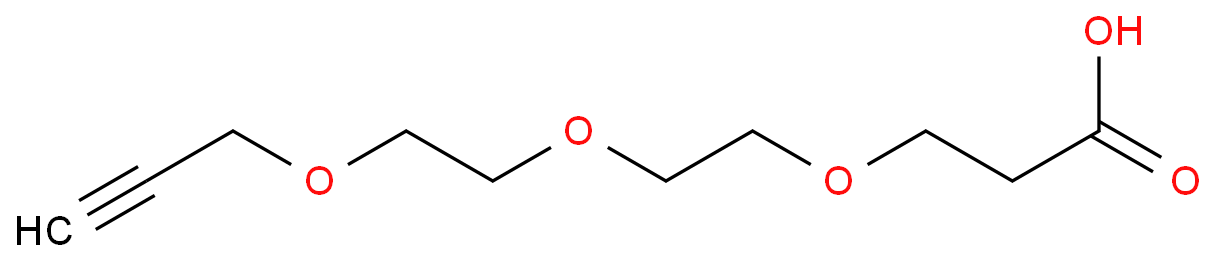
Propargyl-PEG3-acid is a high-performance, highly specialized chemical compound widely used in biomedical research and materials science. Featuring a unique molecular architecture, it consists of a propargyl group linked to a triethylene glycol (PEG3) spacer and terminated with a carboxylic acid functional group, endowing the molecule with excellent reactivity and stability.
The synthesis involves precise chemical reactions and rigorous purification processes, ensuring high product purity and consistency. Its dual functional groups enable versatile applications: the terminal alkyne allows for copper-catalyzed azide-alkyne cycloaddition (CuAAC) "click" reactions, while the carboxylic acid can be activated for amide bond formation with amines, making it a valuable bifunctional linker.
Primary applications include the construction of bioactive molecules, polymer synthesis, and drug development. It plays a key role in advanced research settings such as bioconjugation, surface functionalization, and the development of drug delivery systems. Due to its hydrophilic PEG segment, it also improves aqueous solubility and biocompatibility in biological contexts. These attributes make Propargyl-PEG3-acid a preferred building block in cutting-edge scientific and pharmaceutical research.